
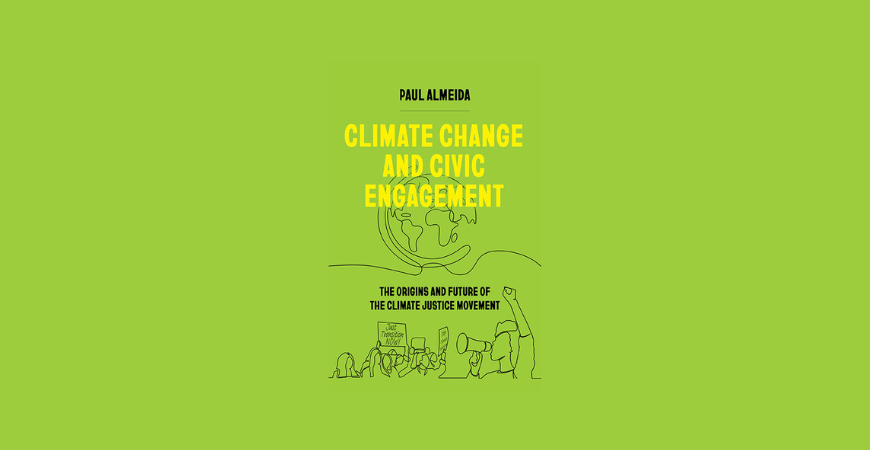
The battle over climate change rages on multiple fronts, from fights against staunch denialism to arguments over well-intentioned technocratic solutions.
In “Climate Change and Civic Engagement,” UC Merced sociology Professor Paul Almeida tracks where the push for expanded involvement in climate action has been and where it needs to go, especially along a more equitable pathway of a “just transition.”
The book, published by University of California Press, analyzes the methods and effectiveness of climate action initiatives from around the world, with a particular focus on the United States and California, including a lengthy chapter on the San Joaquin Valley. Almeida aims to reach beyond activists and politicians to energize people to do things big and small, from attending meetings to tending gardens, from planting urban trees to expanding public transportation.
Almeida presents data from field research, some conducted by UC Merced students, using tools such as geographic mapping and surveys of residents in affected communities.
Almeida’s career has delved deeply into climate justice, social movements, and political and environmental sociology. Previous books include “Social Movements: The Structure of Collective Mobilization” and “Mobilizing Democracy: Globalization and Citizen Protest.”
In a review for “Climate Change and Civic Engagement,” Martha Guzman Aceves, a former administrator for the federal Environmental Protection Agency’s Pacific Southwest Region, said Almeida “provides us with the tools to seek the audacious objective of not only addressing global climate challenges, but improving the quality of life of those most impacted.”
Read a review of the book in Stanford Social Innovation Review
The book is based on more than 10 years of research involving an exhaustive collection of climate movement events around California, the nation, and the world between 2003 and 2023. Almeida enhances his empirical evidence with over 4,000 representative surveys about climate action collected with community partners, UC Merced Community and Labor Center, and UC Merced students from households in the Central Valley on the climate needs of disinvested communities.
A core takeaway from the community-based surveys, in terms of expanding the participation of ordinary people in climate planning, adaptation, and employment, centers on meeting the other primary needs of working families, such as the cost of living, housing, energy bills, employment, and immigration reform.


